
Skyroot Aerospace is set to launch the maiden test flight of its orbital-class rocket, Vikram-1, from SDSC-SHAR on July 18, marking a significant milestone for India's private sector in the global launch business.

Skyroot Aerospace successfully launched India's first privately developed orbital rocket, Vikram-1, placing multiple technology demonstration payloads and commemorative items, including a postcard from Prime Minister Narendra Modi, into low Earth orbit, marking a significant entry into the global orbital launch market.

'With Vikram-1, we take our biggest step yet towards a reliable, high-cadence launch programme built in India, for India and the world.'
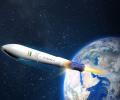
The Vikram-I rocket will fly with its maximum carrying capacity and put the satellites in a Low Earth Orbit.

In a strategic move for the upcoming West Bengal elections, the BJP has announced its first candidate list, highlighted by Suvendu Adhikari challenging Mamata Banerjee in both Nandigram and Bhabanipur.
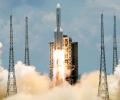
India's first privately developed rocket -- Vikram-S -- is set for launch in a sub-orbital mission with three payloads between November 12 and 16, Hyderabad-based space startup Skyroot Aerospace announced on Tuesday.

The maiden mission of Skyroot Aerospace, named 'Prarambh' (the beginning), will carry payloads of two Indian and one foreign customers and is set for launch from the Indian Space Research Organisation's launchpad at Sriharikota.

'What we have done is a symbol of new India; that is what a small start-up can do, a few hundreds of people coming together, developing a rocket and launching to space and succeeding at the very first attempt.'

'With India's growing capabilities in the space sector, this creates promising opportunities for enhanced collaboration and market access.'

The spacetech startup is expected to launch the first rocket which can hurl satellites of 250-700 kg into a lower Earth orbit by end-2021.
Lauding India's ambitious space programme, The New York Times has said the country, currently witnessing an 'explosive' growth in space-tech start-ups, is set to 'transform the planet's connection to the final frontier' and can emerge as a 'counterweight' to China.

The race for space has got real, and it is attracting funding like never before. In 2022 so far, funding to private players in the space sector has jumped a whopping 61.5 per cent - soaring to $108.52 million compared to $67.2 million in 2021. Propelling it is the government's decision to open up the space sector to private players and the work done by companies like Skyroot Aerospace, the Hyderabad-based start-up behind the launch of India's first privately developed rocket on November 18.

The new year will witness two unmanned missions under the "Gaganyaan" project, deep ocean exploration project, "Samudrayaan" and many more.
